
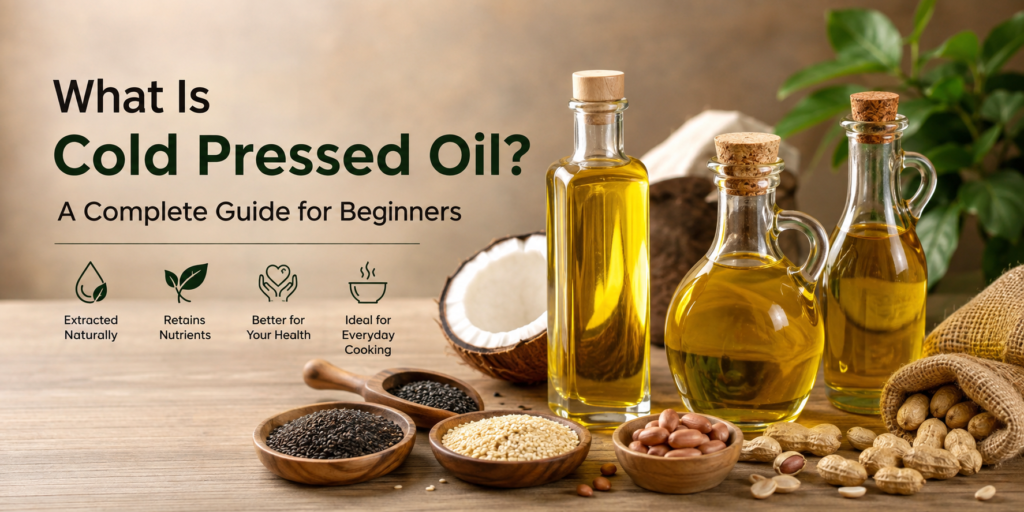
What Is Cold Pressed Oil? A Complete Guide for Beginners
If you are a person who has recently started looking for healthier cooking oils and having doubts of which one you should choose, in this situation you may have come across the term cold pressed oil. But what exactly does it mean? How is cold pressed oil made? Is it different from refined oil? And how do you choose the right oil for your kitchen?
For beginners, these questions can be confusing. Cold pressed oil is simply oil which is extracted from seeds like almonds, sesame, coconuts, groundnuts or fruits using a traditional pressing method, with this only the minimal heat involved during extraction. Because the process is more gentle, comparatively less heater than many modern oil extraction methods, and you know this cold pressed oils are valued much in among people and market, because retaining much of the natural character, aroma and flavour of the source ingredient.
In this guide, let’s understand cold pressed oil in simple terms and see why it is becoming a popular choice for everyday cooking.
What Is Cold Pressed Oil?
This healthy, nutrient- rich cold pressed oil is produced by mechanically pressing seeds, nuts or fruits to extract their natural oil without doing this on high-temperature processing.
These traditional oil extraction methods have been used from a long generations back before finding these high heat methods for extraction. For ages ago people get this rich nutrients based oil from this mechanically cold pressed method. Seeds such as groundnuts, sesame seeds, coconuts and almonds can be pressed in this method to release their natural oils without losing any flavours or nutrients.
The word “cold pressed” reflects the extraction approach and it comes up with an exact meaning that the oil is literally produced at a cold temperature. Mechanical pressing normally generates small natural heat waves due to friction, but the process avoids deliberately heating the raw material to very high temperatures.
This gentle extraction method helps preserve the natural characteristics of the oil, including its aroma, colour and flavour.
How Is Cold Pressed Oil Made? The Process..
After you come to know about this cold pressed oil what will be the first thing that will pop up in your mind, how it is made, why it’s better for cooking. Let us look at how it’s actually made and the process but the one thing is, the exact process can vary depending on the oilseed and equipment used, but the basic process is common and more straightforward.
1. Selection of raw Materials
Good quality seeds, nuts or fruits are first selected for oil extraction purposes. For example, groundnuts are used to make groundnut oil, sesame seeds are used for sesame or gingelly oil, and coconuts are used to produce coconut oil.
2. Cleaning
The raw materials of nuts and seeds will go through the cleaning process carefully to remove dust, stones, and unwanted particles.
3. Pressing
The cleaned material of seeds and nuts are added into a cold pressed mechanical to extract oil. The seeds or nuts are crushed and pressed, allowing the natural oil to come out.
4. Filtration
The freshly extracted oil may contain tiny particles from the seeds. It can be filtered or allowed to settle naturally before being bottled.
5. Bottling or Storing
The cleaned extracted oil is stored and packed in suitable containers to help maintain its quality, shelf life and freshness.
This is the reason why you may have heard terms such as wood pressed oil or traditional oil when talking about naturally extracted cooking oils. However, these terms can refer to different extraction methods, so it is always useful to check how the particular oil is actually produced.
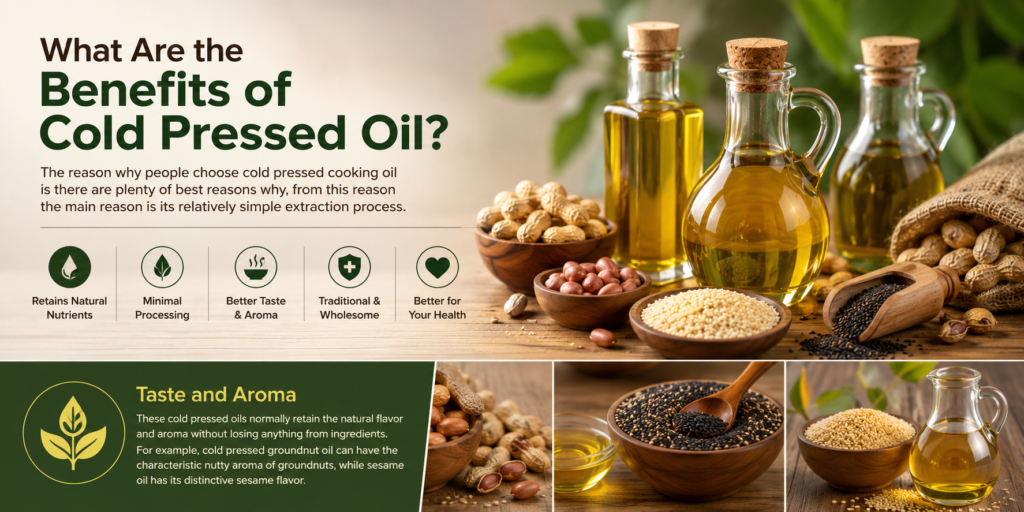
What Are the Benefits of Cold Pressed Oil?
The reason why people choose cold pressed cooking oil is there are plenty of best reasons why, from this reason the main reason is its relatively simple extraction process.
Taste and Aroma
These cold pressed oils normally retain the natural flavor and aroma without losing anything from ingredients. For example, cold pressed groundnut oil can have the characteristic nutty aroma of groundnuts, while sesame oil has its distinctive sesame flavor.
Minimal Processing
Compared with highly processed refined oils, cold pressed oils typically go through fewer processing steps. This makes them good to people who prefer simpler and more traditional food choices.
Retains Natural Characteristics
The gentle mechanical extraction process helps retain many of the naturally occurring components of the oil. However, the nutritional profile varies between different oils, so one oil should not automatically be considered better than every other oil.
Traditional Cooking
Cold pressed oils are closely connected with traditional cooking practices. In South Indian kitchens, oils such as gingelly oil, coconut oil and groundnut oil have long been used in different types of dishes.
Cold Pressed Oil vs Refined Oil
When you think about cold pressed oil for cooking you always end up with one of the most common questions is the difference between cold pressed oil and refined oil.Let us see the main difference is the processing method.
Cold pressed oil is mechanically extracted from seeds, nuts or fruits with minimal heating and removes impurities and dust. But these refined oils generally go through additional processing steps to remove impurities and produce a more same appearance, flavor and smell.
Cold pressed oils may have a more natural color, aroma and flavor, while refined oils are often lighter and more neutral.
If you are planning to buy cooking oils from cold pressed or refined just don’t look at the processing method alone. Consider the raw material, freshness, packaging, storage conditions and how you plan to use the oil.
How to Choose Good Cold Pressed Oil
When buying cold pressed edible cooking oil, don’t simply look for the words “cold pressed” on the label and buy blindly.
Check:
The quality raw materials where its sourced
The extraction method
Ingredients and additives
Manufacturing and best-before dates
Packaging and storage instructions
Whether the brand clearly explains its production process
Is Cold Pressed Oil Good for Everyday Cooking?
If you are doing diet and workout you can take this cold pressed oil in your cooking as part of a balanced diet.
Different cold pressed oils have different flavors and tastes, you have to choose fatty acid oils that are best for cooking. It has cooking characteristics. You can choose an oil depending on the recipe and your personal and cooking preferences.
For example, coconut oil, groundnut oil and gingelly oil each have their own traditional uses in South Indian cooking.
Why Are People Choosing Traditional Oils Again?
Today, many people concentrate more on their health and they want to know more about where their food comes from and how it is produced.
This thing normally increased interest in traditional ingredients and simpler processing methods which have high nutrients when other processed methods are heavily on high heat. For families in Coimbatore and across Tamil Nadu, traditional oils such as coconut, groundnut and sesame or gingelly oil continue to be familiar choices for everyday cooking.
Final Thoughts
Cold pressed oil is simply extracted from seeds, nuts or fruits using traditional mechanical pressure methods with deliberate minimal heating.
From cold pressed coconut oil and groundnut oil to traditional gingelly oil, each variety has its own flavor, characteristics and culinary uses.
If you are trying cold pressed oil for cooking for the first time, understand the process method and how its source, extraction method, freshness and storage of the product before buying. Most importantly, choose a reliable brand that is transparent about how its oil is produced.
With a better understanding of cold pressed oil, you can make a more informed choice about the cooking oil you bring into your kitchen.