
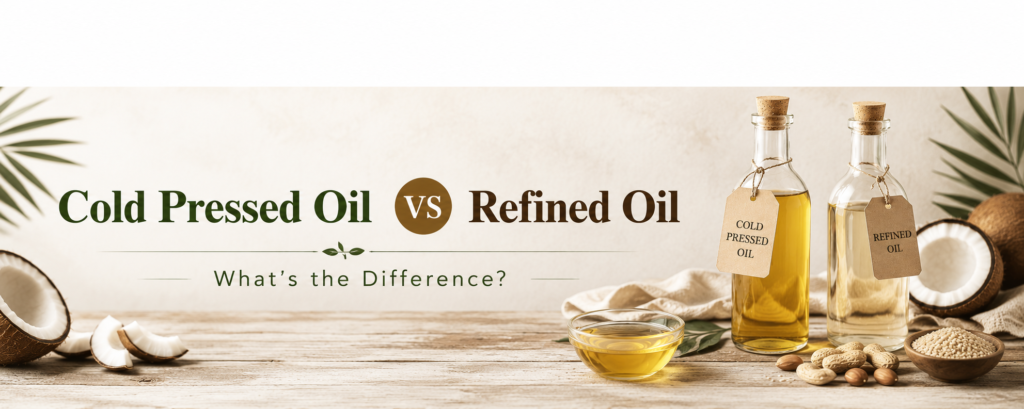
While cooking in the kitchen, you may have heard about the terms like cold pressed oil and wood pressed oil and refined oil on the bottles of coconut, sesame, and groundnuts. Have you ever thought about what the actual difference is between them?
These refined oils and cold pressed oils are mostly used for cooking, but the making process of both oils is different. By understanding how they are produced from which method will help you to choose the right suitable cooking oil, it will give different taste and preferences.
In this guide, we’ll explain the difference between cold pressed oil vs refined oil in simple terms.
What Is Cold Pressed Oil?
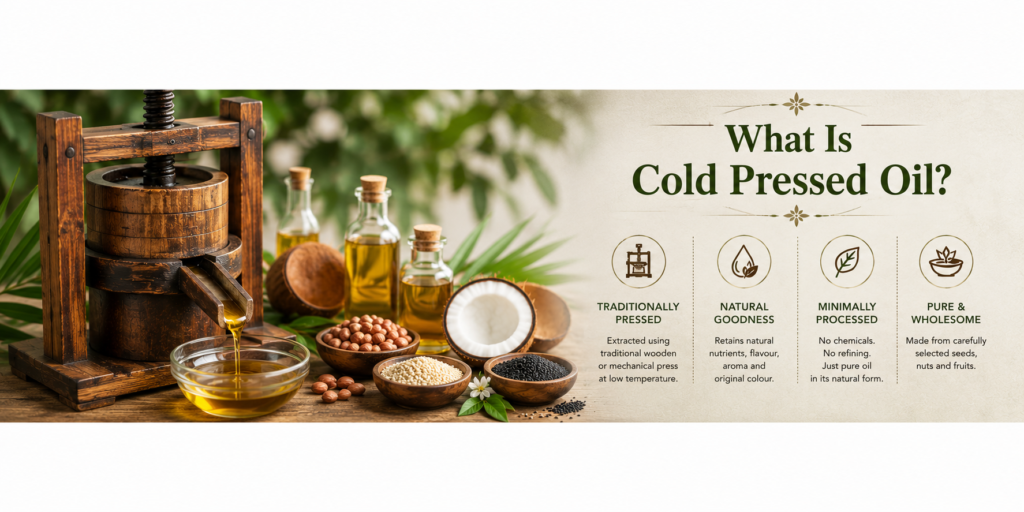
Cold pressed oils normally produced from seeds, nuts and fruits, this method uses mechanical pressure to extract oil from seed, in this method only produce minimal heat without intentionally giving high temperatures during the process.
Common examples include cold pressed coconut oil, cold pressed groundnut oil and cold pressed sesame oil, also known as gingelly oil.
After source, good quality raw material went through cleaning methods then sent for mechanically pressed to release its natural oil from those seeds. The extracted oil may then be filtered or allowed to settle before being bottled.
Cold pressed natural oils mostly retain their nutrients and natural characteristics of the ingredients, including smell, flavor and color.
What Is Refined Oil?
Making refined oil differs from cold pressed oil, in this refined oil making process includes filtering the oil to remove unwanted pieces, dusts and create an oil with a more consistent appearance, flavor, aroma and shelf stability.
Depending on the type of oil and manufacturer, refining can involve processes such as filtering, neutralization, bleaching and deodorization. So the oil looks lighter and has a neutral smell and taste.
This neutral flavor of the refined oil makes this refined oil perfect for cooking, because we don’t want a strong flavor.
Cold Pressed Oil vs Refined Oil: Key Differences
The easiest way to understand the difference is to compare their processing and characteristics.
1. Extraction and processing
Cold pressed oil is mainly produced through mechanical pressing with minimal deliberate heating.
Refined oil generally goes through multiple processes not like a cold pressing simple method; it has several several processing steps after extraction to achieve a more uniform product with color and taste.
2. Taste and aroma
Cold pressed oils usually obtained from a simple process have a more natural aroma and flavor. For example, cold pressed groundnut oil may have a mild nutty aroma, while cold pressed sesame oil has the characteristic flavor of sesame.
Refined oils are generally more neutral in taste and aroma.
3. Color
Cold pressed oils don’t have the same colors naturally, because of these raw materials and processing methods. So it can naturally vary in color.
Refined oils are usually lighter and more uniform in appearance because of the refining process. To get a uniform color this oil undergoes more steps.
4. Processing level
One of the biggest differences between the two is the amount of processing involved.
Cold pressed oil is generally associated with simpler mechanical extraction, while refined oil goes through additional processing stages.
If you prefer cooking oils with a more traditional production approach, cold pressed oil may be more appealing.
Is Cold Pressed Oil Healthier Than Refined Oil?
- If you are into oil and cooking, the most common question you have encountered is “Is Cold Pressed Oil Healthier Than Refined Oil?” and this is one of the most needed questions people ask.
- Just because of the making method doesn’t make every cold pressed oil automatically healthier than every refined oil. Different oils have different nutritional profiles, and the overall quality of your diet, the amount of oil used and cooking practices also matter.
- However, many people choose cold pressed cooking oil because they prefer minimally processed products and want an oil that retains more of the natural characteristics of the original ingredient.
- Rather than focusing only on the words “cold pressed” or “refined”, look at the specific oil, its quality, processing method and how it fits into your regular diet. If you prefer minimal flavor and smell cooking you can pick refined oils and if you want good nutrients from your oil you can pick cold pressed oil.
Which Is Better for Cooking?
- The answer depends on your personal preferences and the type of food you prepare in your kitchen.
- If you enjoy cooking oils with a natural aroma and flavor and prefer traditional extraction methods, cold pressed oil can be a good option to consider.
- If you prefer an oil with a neutral taste and lighter appearance, refined oil may suit your cooking preferences.
- For South Indian cooking, oils such as cold pressed coconut oil, groundnut oil and gingelly oil are popular because their natural flavors work well with traditional dishes so will come under your preferences.
How to Choose a Good Cooking Oil
Whichever type you choose, pay attention to the quality of the product.
Before buying, check:
- The type of oil used
- Source and quality of the raw material
- Extraction or processing method
- Manufacturing and best-before dates
- Packaging and storage instructions
- Ingredients and additives listed on the label
- Whether the brand clearly explains how the oil is produced
Final Thoughts
The main difference between cold pressed oil vs refined oil comes down to how the oil is processed before getting our hands.
Cold pressed oil is mechanically extracted with minimal deliberate heating and generally retains more of the natural flavor, aroma and characteristics of its source ingredient. Refined oil undergoes additional processing to create a more consistent and neutral product.
Having complications while choosing oils, first understand the differences of processing, consider your cooking habits and choose an oil from a reliable source.
Whether you prefer cold pressed coconut oil, groundnut oil, sesame oil or another cooking oil, the most important step is knowing what is in the bottle and how it was produced.
Frequently Asked Questions
- What is the main difference between cold pressed oil and refined oil?
The main difference between both cold pressed and refined oil is the processing method. Cold pressed oil is extracted mechanically with minimal deliberate heating, while refined oil goes through additional processing to create a more uniform color, flavor and consistency.
- Is cold pressed oil better than refined oil?
The answer is obvious, it depends on your preferences and the specific oil. Many people prefer cold pressed oil because it involves relatively minimal processing and retains more of the natural characteristics of the source ingredient.
- Can cold pressed oil be used for everyday cooking?
Yes. Cold pressed oils such as groundnut oil, coconut oil and sesame oil can be used in everyday cooking. It depends on the recipe and cooking methods.
- Why does cold pressed oil have a stronger smell?
Cold pressed oils undergo a simple method for extracting, so it retains more of the natural aroma and flavor of the ingredients from which they are extracted. This is why they may have a more noticeable smell compared with refined oils.
- Which cold pressed oil is commonly used in South Indian cooking?
Groundnut oil, coconut oil and gingelly oil are popular choices in South Indian cooking. Each has its own flavor and traditional uses.
- How should cold pressed oil be stored?
Keep the bottle tightly closed and store it in a cool, dry place away from direct sunlight and excessive heat. Always follow the storage instructions provided on the product label.